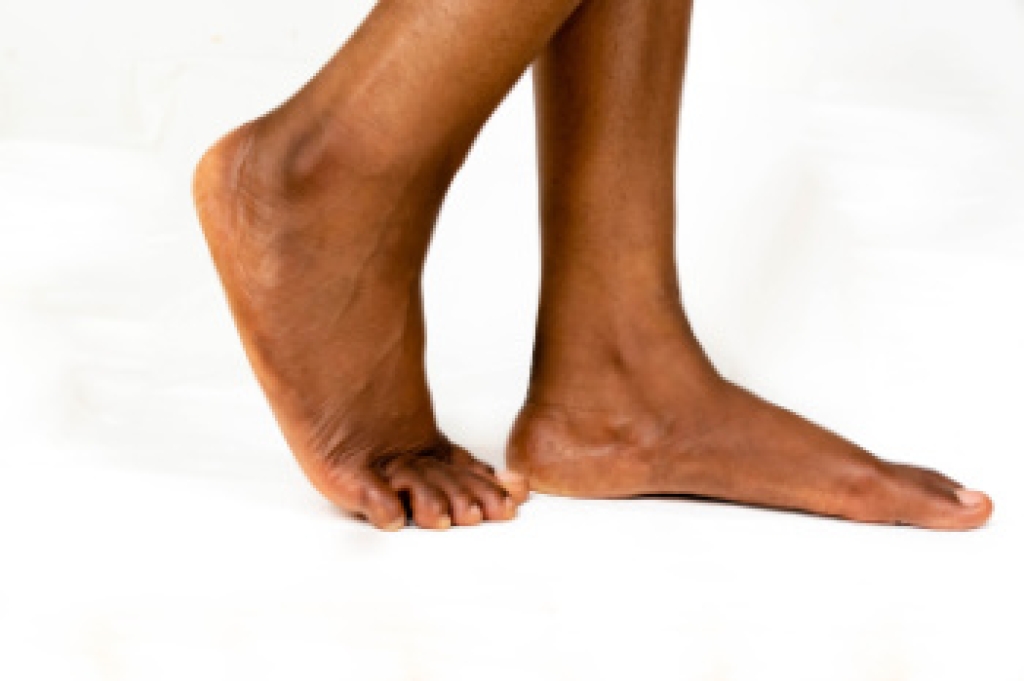
Flat feet occur when the arches along the inside of the feet are low or flatten when standing. The arches help distribute body weight and support efficient movement while walking or standing. Some people have flat feet from childhood, while others develop them later in life. Changes in muscles or tendons that support the arch can contribute to flattening. Age, injury, and repeated stress on the feet can also play a role. Some people with flat feet have no discomfort. Others experience foot pain, tired feet, or swelling near the ankle. Pain can also develop in the heel or arch. Flat feet can affect how weight moves through the feet, which can change the way a person stands and walks.
A podiatrist can evaluate flat feet by examining the arches and observing how the feet function while standing and walking. An examination can include checking foot flexibility, ankle movement, and areas of tenderness. The podiatrist can also assess how the heels and ankles are positioned when weight is placed on the feet. Treatment depends on the patient's symptoms and how flat feet affect daily activities. Custom orthotics can provide added support and help improve the way pressure is distributed across the feet. A podiatrist can also recommend appropriate shoes that provide support and fit the patient's foot structure. Targeted exercises can be prescribed to improve strength and flexibility in the feet and lower legs.
Flat feet can make prolonged standing, walking, and physical activity uncomfortable for some patients. Changes in foot movement can also place added stress on the ankles, knees, or lower legs. A podiatrist can identify these movement patterns and develop a treatment plan focused on reducing discomfort and supporting better foot function. Care can be adjusted according to the patient's activity level and response to treatment. Improving support and pressure distribution can help the feet function more efficiently during everyday activities. Treatment can also address related problems that develop because of changes in foot mechanics. If you have symptoms of flat feet, it is suggested that you make an appointment with a podiatrist for diagnosis and treatment.
Flatfoot is a condition many people suffer from. If you have flat feet, contact Darron Barrus, DPM from Shelby Podiatry. Our doctor will treat your foot and ankle needs.
What Are Flat Feet?
Flatfoot is a condition in which the arch of the foot is depressed and the sole of the foot is almost completely in contact with the ground. About 20-30% of the population generally has flat feet because their arches never formed during growth.
Conditions & Problems:
Having flat feet makes it difficult to run or walk because of the stress placed on the ankles.
Alignment – The general alignment of your legs can be disrupted, because the ankles move inward which can cause major discomfort.
Knees – If you have complications with your knees, flat feet can be a contributor to arthritis in that area.
Symptoms
- Pain around the heel or arch area
- Trouble standing on the tip toe
- Swelling around the inside of the ankle
- Flat look to one or both feet
- Having your shoes feel uneven when worn
Treatment
If you are experiencing pain and stress on the foot you may weaken the posterior tibial tendon, which runs around the inside of the ankle.
If you have any questions, please feel free to contact our office located in Alabaster, AL . We offer the newest diagnostic and treatment technologies for all your foot care needs.